Australian Death Notification Service
Context
When someone dies, the people closest to them are asked to become administrators at the worst possible moment. In our research, people described moving through a "cloud of grief": not thinking clearly, dealing with things as they surfaced rather than when they should, having the same painful conversation over and over.
As one person put it:
"They try to be nice over the phone, but it's going over the same thing constantly… it can be so difficult."
Another was blunter about what they wanted:
"It should just happen. Everyone should be notified."
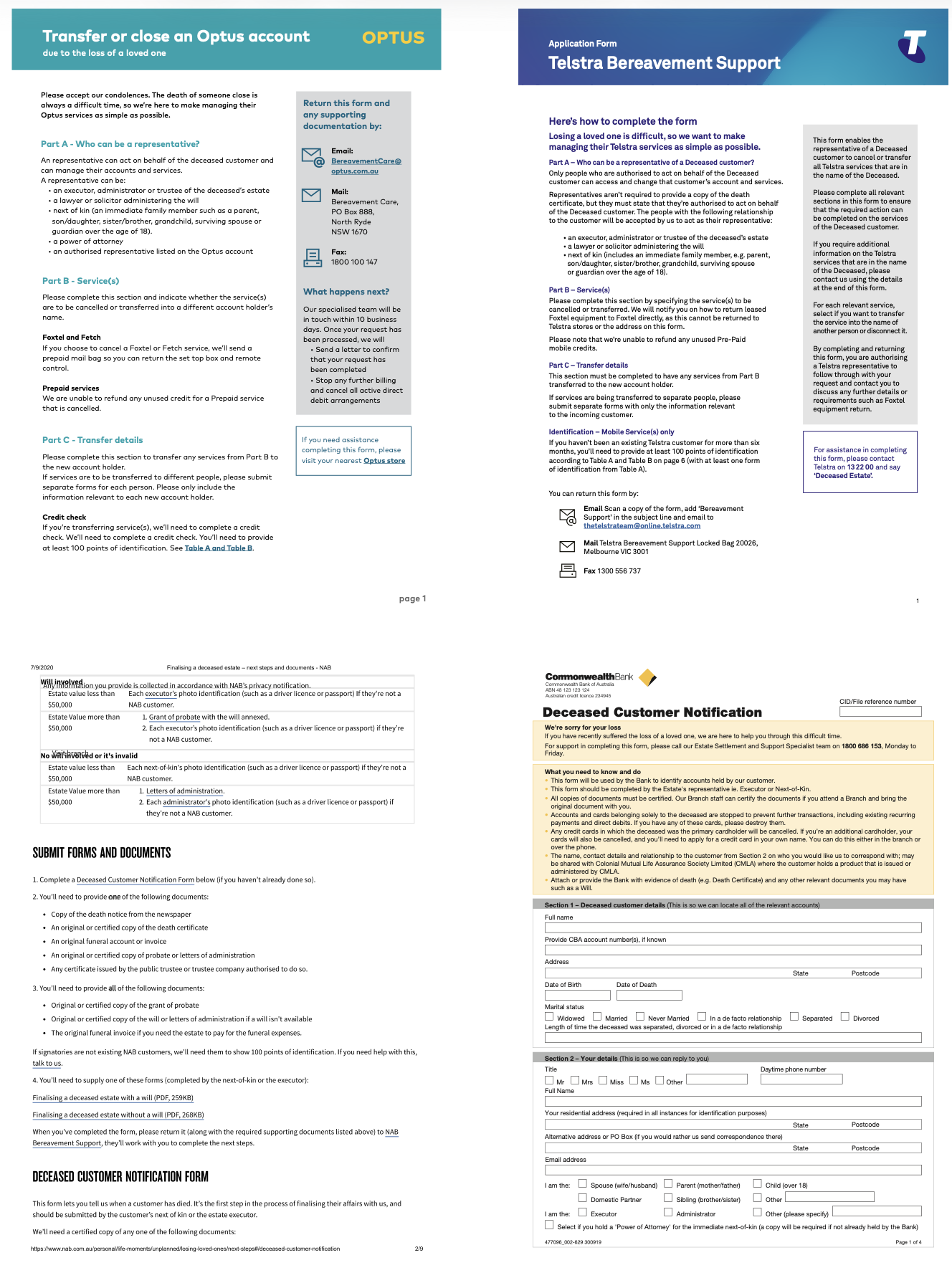
The burden was real and measurable. On average it took 42 days after a death for someone to even begin notifying institutions. Working out who to contact and how could take several months. All up, the process demanded around 30 hours of effort, as many as 40 separate forms, and repeated physical visits carrying proof of death.
The opportunity
That framed the question we set out to answer:
How might we share data about a death, while protecting privacy, to make administration easier for individuals, agencies, and service providers?
The prize was straightforward to describe and hard to deliver: make it easier to start, suggest who to notify and streamline how, save people time and effort, and reduce the need to keep proving a death had happened.
What we built
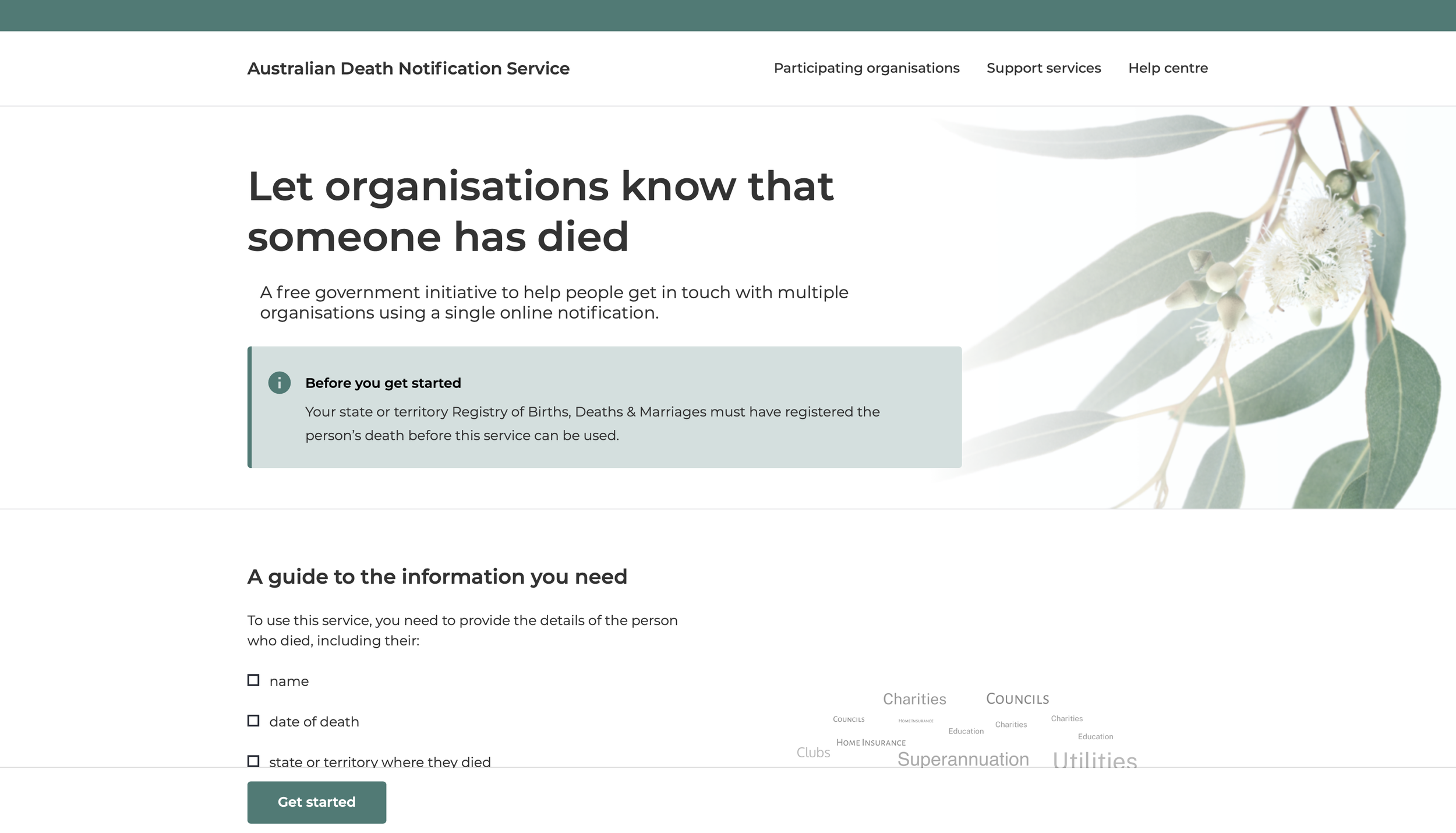
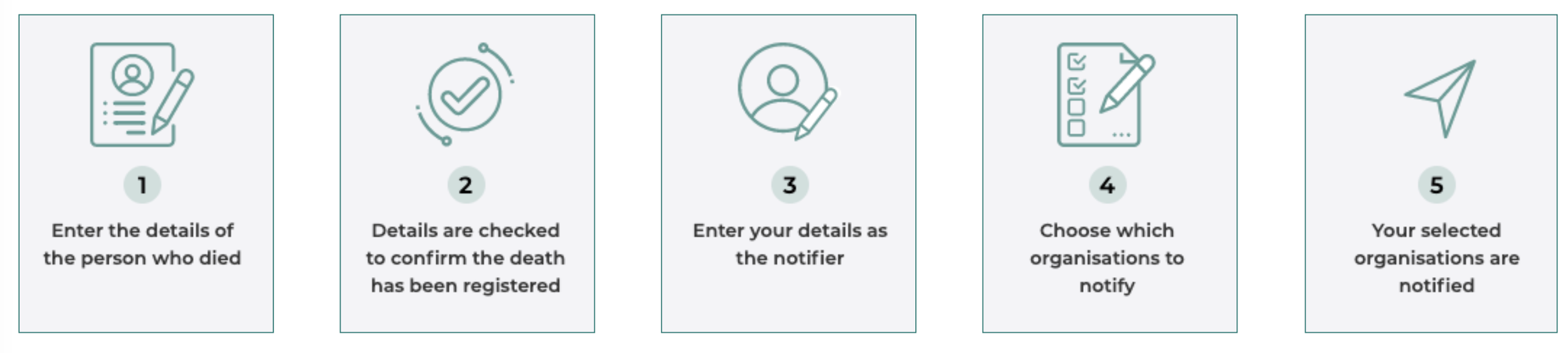
The Australian Death Notification Service (ADNS) lets people notify multiple institutions of a death through a single, secure online process, instead of contacting each one separately. Behind the scenes, it validates the details of the person who has died against the Australian Death Check (national death-registration data held by state governments) so organisations can act on a notification with confidence, and families aren't asked to produce yet another certified copy.
Who it was for, and why that was the hard part
ADNS was never a single-audience service, and that's what made it interesting to design.
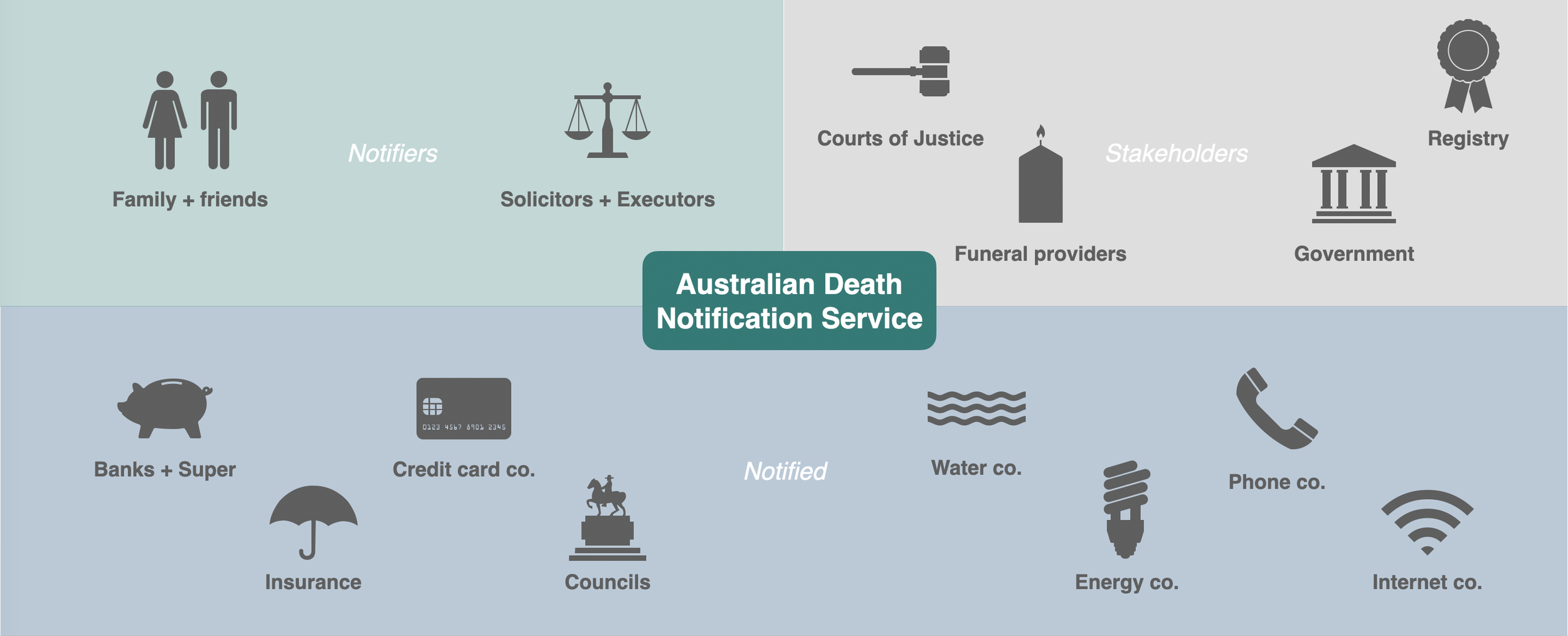
On one side were the notifiers: family and friends, but also solicitors, executors, and funeral providers acting on someone's behalf. On the other were the organisations being notified: banks and super funds, insurers, credit-card companies, councils, utilities, and telcos. Around both sat the stakeholders who governed and funded the service: the NSW Registrar, the Births, Deaths & Marriages Registry, and, because a death doesn't stop at a state border, registrars from every other state and territory.
Designing something that genuinely served all three at once, when what was convenient for one was often costly for another, was the real problem to solve.
My role
I led research and service design on the project. As Research Lead I planned, ran, and synthesised the user research, coordinated recruitment and surveys, and (just as importantly) communicated findings in a way that shaped design decisions. As Service Designer I ran co-design workshops, built the journey and service maps, and produced low- and mid-fidelity prototypes.
Day to day I worked alongside a cross-functional team of designers, developers, business analysts, and subject-matter experts. Regularly, I was in the room with senior leadership: Directors, Registrars, and the Minister's office.
How the research worked
Organisations came online in order of value to the customer first (banks and super, then telcos, energy, water, and government agencies), and the research ran on a cadence tied to that rollout: interview, prototype, test, iterate, release. When a release was brought forward, we ran the user testing straight after launch rather than skipping it.
Two methods anchored the work, and I kept them deliberately separate, with usability repeating for each onboarding cycle.
User interviews with people who had recent lived experience of managing a death (60-minute moderated sessions, n=8), to understand real pain points and needs.
Usability testing with the general population (n=6–8), to pressure-test the design with people imagining the task rather than living it.
Grief changes what someone needs and how much they can tolerate, so it mattered that we didn't blur those two groups together.
Turning non-research moments into research
Some of the most useful evidence came from activities that were never briefed as research at all: I just treated them as opportunities.
A survey commissioned purely to choose the service's name became a chance to ask 801 people which organisations they'd most want to notify, and to gauge their appetite for the value proposition.
A pre-launch check meant only to confirm that organisations were receiving notifications became a self-directed usability test, with a feedback survey attached to capture desired features.
I also interviewed solicitors (n=7) about estate-management needs, and monitored the public feedback that flowed in whenever the Minister posted about the service.
Design principles became our North Star for decisions
The recurring tension was that a decision good for one group was often not for another. We navigated it with a set of design principles that kept the grieving user at the centre. I led the creation of the principles via a workshop and targeted feedback from the most critical stakeholders.
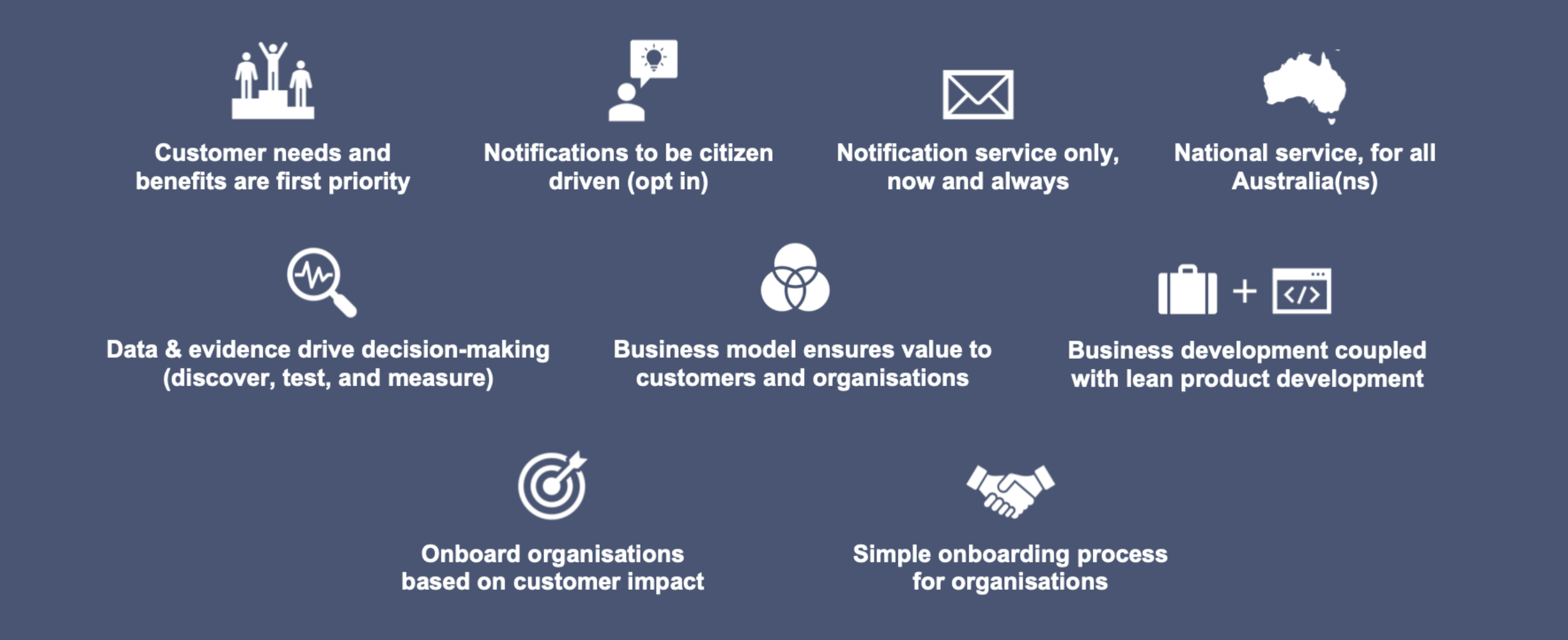
They didn’t just sit on the shelf. We used them to settle real disagreements and misaligned priorities.
A few of the calls I'm proudest of holding:
A partner organisation wanted people to enter a customer account number, because it would make matching easier on their side. We pushed back: someone in the first days of grief rarely has an account number to hand, and asking for one would quietly exclude the people who needed the service most.
We were lobbied to onboard organisations based on commercial appeal (one framed it as a chance to cleanse data and clear loyalty-points balances) or internal priority. We held the line that organisations should join only where it served the public interest and the customer.
"We're NSW government, so we should prioritise NSW agencies." But death doesn't respect state borders, and neither could the service: it had to be nationwide to be worth building.
Not every battle went our way. The colour scheme, of all things, became a genuinely contested cross-state political question: one premier objected that a maroon state couldn't be represented in dark blue, and registrars pushed for a neutral teal. It's a small, almost funny example of a real truth about this kind of work: some decisions are settled by politics, not evidence, and knowing which battles to spend your credibility on is part of the job.
How research influenced the service
Research didn't sit in a report. It fed directly into decisions across the service: the language and contextual content people saw, the design iterations and features that got built, which user stories were prioritised, which organisations onboarded and when, the design principles themselves, and even where and through whom we spread the word.
The impacts
We launched in under six months, and the service was taken up across organisations that shared no common process between them: government agencies, banks, and insurers, each with its own systems, rules, and definition of what a valid notification looked like.
Within 18 months, ADNS had scaled to 47 organisations and saved notifiers more than 16,000 hours of administration. Our teams’ work received the NSW Secretary's Award for Service Delivery and Reform.
Why this project meant so much to me
The problems I care about most don't necessarily respect organisational boundaries. The answers depend on holding several competing truths, and deciding whose need comes first. ADNS was that in its purest form: a service for people in their hardest week, built by keeping the person in the "cloud of grief" at the centre of every decision.
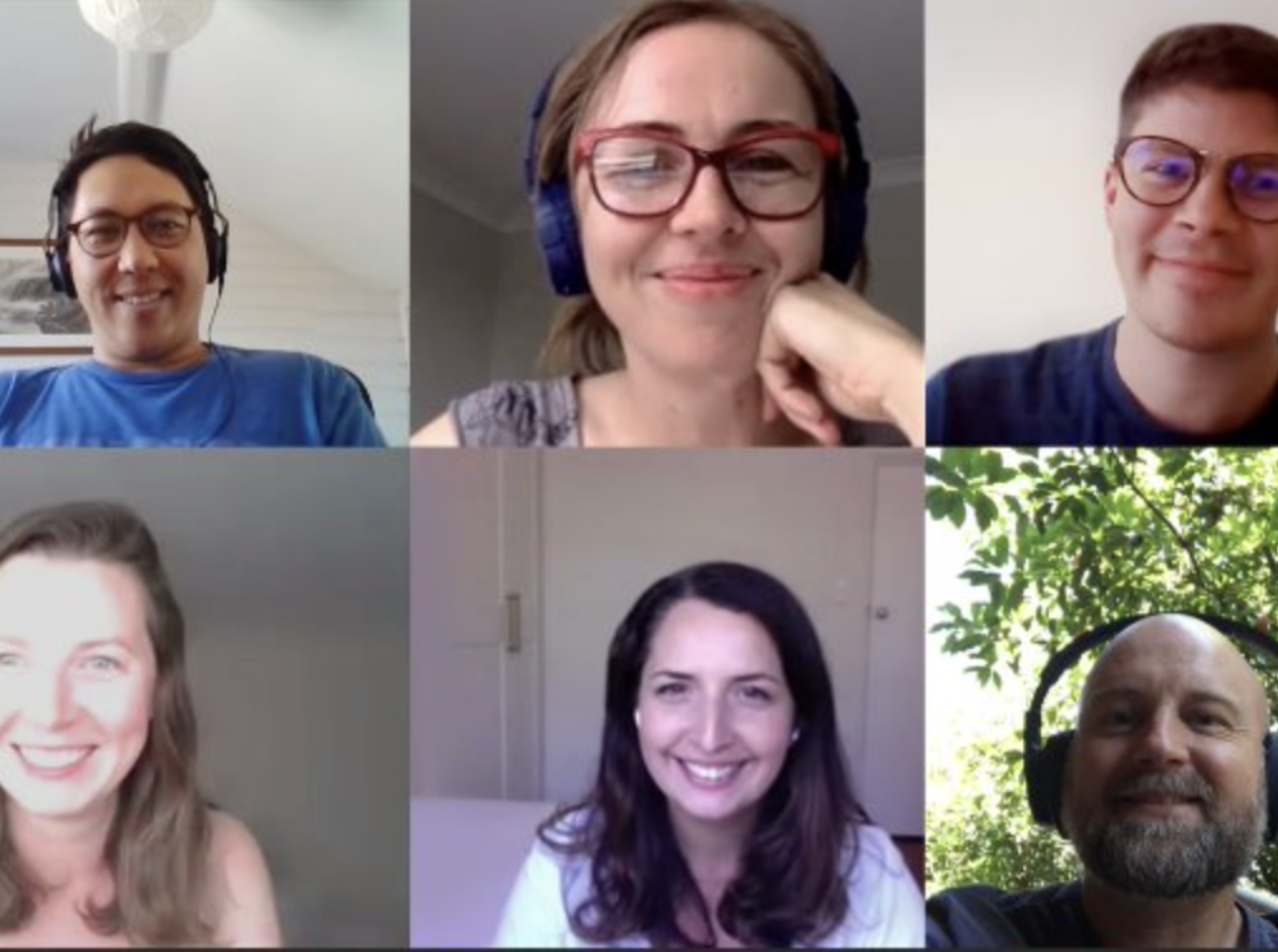
And, on a personal note, I found this team to be one of the most cohesive, connected teams I ever worked within. And, we did it all during lockdowns of the initial COVID19 pandemic outbreaks in 2020. While I value opportunities to work together in person, this project showed that you can create something quickly, collaboratively, with huge impact while never being in the same room.